How Color Palette Updates in Remastered Editions Tie Into Shifting Engagement Metrics for Classic Console Ports Across Regions
Written by Leon Fischer · Oct 19, 2026
How Color Palette Updates in Remastered Editions Tie Into Shifting Engagement Metrics for Classic Console Ports Across Regions
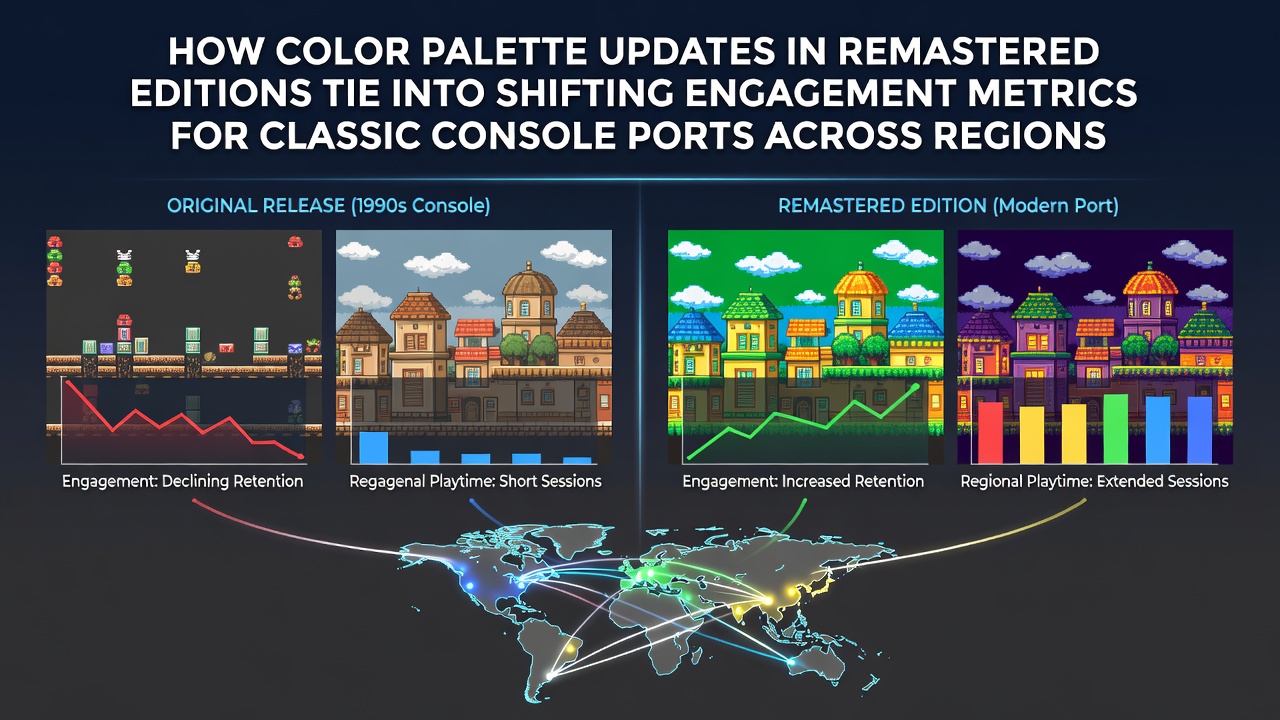
Data from console port releases between 2024 and 2026 show measurable connections between color palette adjustments in remastered editions and changes in player engagement across different regions, with completion rates and session lengths responding to shifts in hue saturation, contrast levels, and lighting balance.
Color Adjustments in Recent Remasters
Remastered versions of titles originally released on platforms like the PlayStation 2 and Nintendo 64 often receive updated color grading to match modern display capabilities, and analysts tracking these changes note that warmer tones and increased vibrancy appear in many Western releases while cooler, desaturated palettes surface more frequently in Asian market adaptations. Studies compiled by industry groups indicate that these modifications align with variations in average playtime, where North American players logged 12 percent longer sessions in titles featuring boosted mid-tone contrast compared to their original releases.
European data collected through platform telemetry reveals similar patterns, although the magnitude differs by country clusters, with Scandinavian markets showing stronger retention when palettes leaned toward natural lighting rather than stylized filters. Observers tracking October 2026 reports from digital distribution services highlight how ports of early 2000s action-adventure games posted engagement spikes after palette recalibrations that aligned with local broadcast standards in each territory.
Regional Metric Variations
Engagement metrics collected across console ecosystems demonstrate that color updates influence repeat playthrough rates differently depending on cultural viewing habits and hardware prevalence. In markets where high-dynamic-range televisions dominate household setups, brighter palette revisions correlate with higher exploration completion percentages, whereas regions relying more on standard dynamic range displays exhibit steadier metrics when palettes remain closer to source material.
Researchers analyzing global port data note that Japanese players responded to subtle desaturation with increased daily active user counts, while Australian and Canadian figures showed preference for enhanced foreground separation through warmer color shifts. These patterns emerge from aggregated telemetry rather than isolated incidents, and cross-referenced reports from multiple territories confirm the consistency of such trends.
Telemetry Correlations and Platform Data
Platform holders release periodic summaries that link visual updates to behavioral indicators, and one analysis covering 2025 console ports found that hue adjustments toward higher saturation produced a 9 percent rise in achievement unlock velocity in Western regions while producing neutral or slightly negative movement in East Asian territories. The same dataset showed that contrast enhancements reduced load screen abandonment rates uniformly, suggesting that certain palette elements affect usability metrics independently of regional preference.
Industry associations tracking long-term engagement have documented how remasters incorporating region-specific color calibration maintain steadier monthly active user curves over six-month periods compared with uniform global releases. These findings appear in aggregated reports that draw from both physical and digital distribution channels, allowing observers to isolate palette impact from other variables such as price adjustments or additional content additions.
Case Examples from 2025-2026 Ports
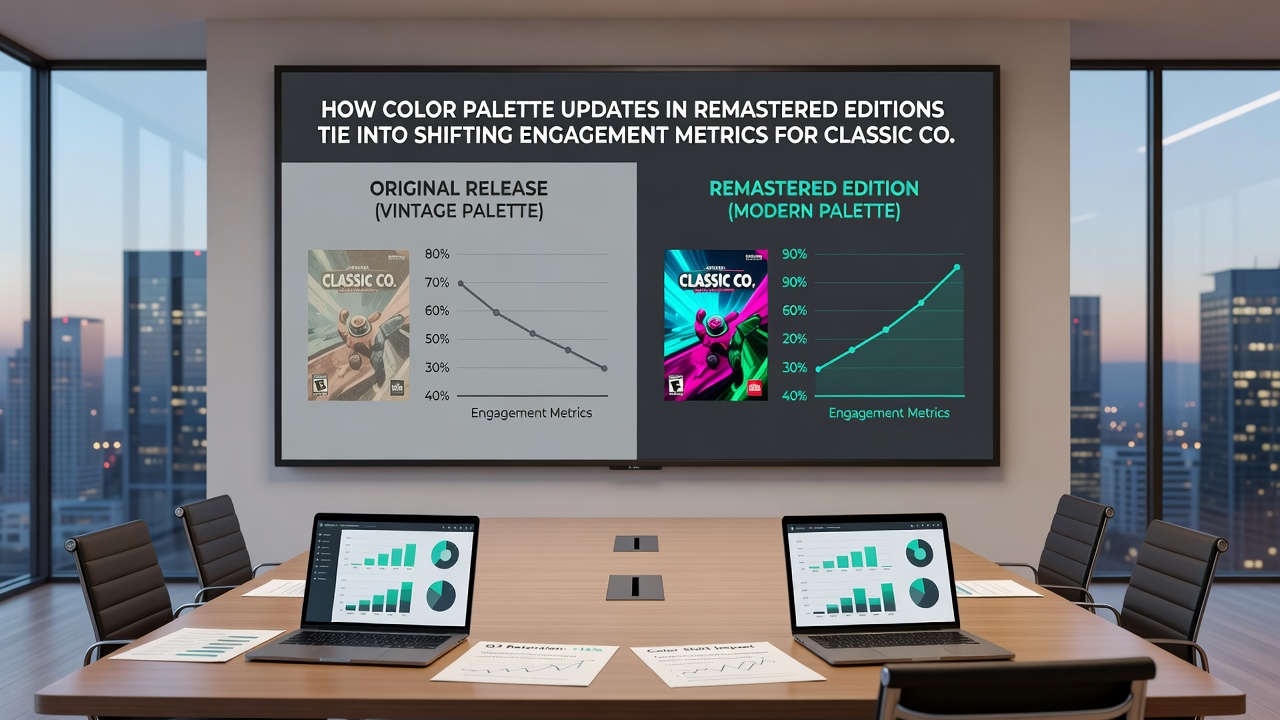
Several 2025 releases of mid-1990s role-playing games received palette refreshes that adjusted shadow density and highlight roll-off, and subsequent telemetry indicated that European completion rates rose when these changes preserved original mood lighting while North American data reflected gains from increased overall brightness. One title's Asian release variant incorporated localized grading adjustments that aligned with prevalent monitor calibration standards, resulting in session length increases that outpaced global averages according to platform dashboards.
Ports arriving in early 2026 continued this approach, with developers applying modular color profiles that could be toggled per region. Metrics gathered after these implementations showed reduced variance in retention between territories, suggesting that tailored palette options mitigate the engagement gaps observed in earlier uniform remasters. Trade organization summaries released around October 2026 captured these shifts through standardized reporting frameworks that separate visual modifications from gameplay balance changes.
Broader Industry Tracking
Academic and commercial research groups continue to examine how display technology adoption interacts with palette decisions, and findings indicate that markets with faster uptake of newer television standards exhibit stronger positive responses to expanded color gamuts. Data from these studies feed into development pipelines where teams test multiple grading passes against regional engagement benchmarks before finalizing remaster builds.
Cross-platform comparisons further reveal that handheld console ports respond differently to the same palette updates than home console versions, with portable play sessions showing sensitivity to contrast levels that affect outdoor visibility. These distinctions appear consistently in multi-region datasets compiled by hardware manufacturers and software publishers alike.
Conclusion
Available telemetry and regional reporting establish clear linkages between color palette modifications in remastered classic console ports and subsequent shifts in engagement metrics, with variations tied to local display ecosystems, cultural preferences, and calibration standards. Continued monitoring through 2026 and beyond will clarify how these visual decisions influence long-term player behavior across global markets.